Buy lippenstift.eu ?
We are moving the project
lippenstift.eu .
Are you interested in purchasing the domain
lippenstift.eu ?
domain@kv-gmbh.de · 0541-91531010
Buy lippenstift.eu ?
What is the difference between ionizing and non-ionizing radiation?
Ionizing radiation has enough energy to remove tightly bound electrons from atoms, creating ions. This type of radiation includes X-rays, gamma rays, and some forms of ultraviolet radiation. Non-ionizing radiation, on the other hand, does not have enough energy to remove electrons from atoms, and includes forms of radiation such as visible light, radio waves, and microwaves. The main difference between the two is the amount of energy they carry and their ability to ionize atoms. **
Who discovered ionizing radiation?
Ionizing radiation was discovered by Wilhelm Conrad Roentgen in 1895. While experimenting with cathode rays, he noticed that a fluorescent screen in his lab would glow even when it was not directly in the path of the rays. This led him to the discovery of X-rays, which are a form of ionizing radiation. Roentgen's discovery revolutionized the field of medicine and earned him the first Nobel Prize in Physics in 1901. **

Similar search terms for Ionizing
Top-Angebote
Products related to Ionizing:
-
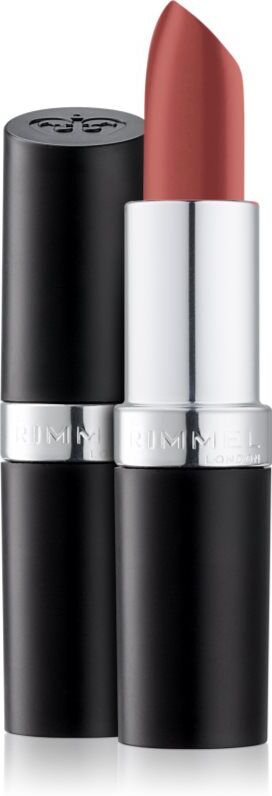
Rimmel Lasting Finish long-lasting lipstick shade 050 Natural Crush 4 gRimmel Lasting Finish, 4 g, Lipsticks for Women, Beautifully accentuated lips never go out of style. The Rimmel Lasting Finish lipstick envelops the surface of your lips in a continuous layer of irresistible and rich colour, accentuating any makeup look perfectly, whether you’re heading to work, a meeting or a party. It allows you to emphasise your lips while also giving them the shape you want or a fuller look. In just a moment, it will give your lips a gorgeous colour and perfect shape, making them the centre of attention and irresistibly kissable. Characteristics: high pigmentation long-lasting creamy texture How to use: Apply lipstick to lips from the centre to the corners using gentle strokes.2,87 £*Shipping: 3,99 £Secure redirect to the provider
-
AA Wings of Color All Day Long Long Lasting Foundation long-lasting foundation shade 504 Natural Beige 30 mlAA Wings of Color All Day Long Long Lasting Foundation, 30 ml, Foundations for Women, Flawless skin is fundamental to every look, whether you’re going for bold evening makeup or very natural daytime makeup. And that’s where the AA Wings of Color All Day Long Long Lasting Foundation foundation can help. It blends in seamlessly with your skin and takes care of a perfectly even skin tone. Thanks to its coverage, it masks minor skin imperfections, such as hyperpigmentation, redness or acne marks, instantly. You’ll achieve an even skin tone in just a moment, and that will serve as an excellent base for any other makeup. Characteristics: long-lasting effect excellent coverage mattifies skin leaves skin elastic and soft gives skin the necessary hydration can be layered for a more intense look allows your skin to breathe Ingredients: hyaluronic acid – binds large quantities of water and hydrates intensively squalane - locks water in skin by forming a protective layer on its surface, hydrates, softens and smooths, helps regulate sebum production, thanks to its strong antioxidant effects it also contributes to a balanced skin tone bamboo extract – stimulates natural collagen production, supports the maintenance of skin elasticity, helps fight premature skin aging How to use: Apply foundation to all base points on the face, forehead, cheeks and chin. Apply foundation to the face using gentle strokes. Blend in thoroughly and evenly with the fingers or a sponge or brush.10,46 £*Shipping: 3,99 £Secure redirect to the provider
-
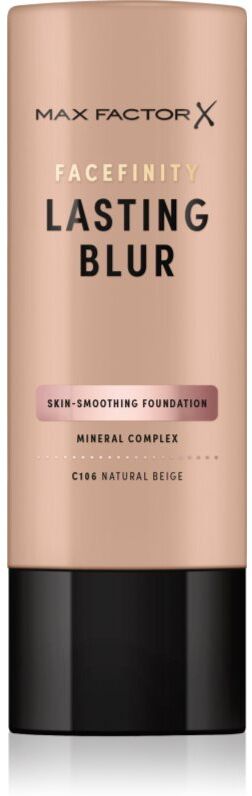
Max Factor Facefinity Lasting Blur long-lasting foundation shade C106 Natural Beige 35 mlMax Factor Facefinity Lasting Blur, 35 ml, Foundations for Women, Flawless skin is fundamental to every look, whether you’re going for bold evening makeup or very natural daytime makeup. And that’s where the Max Factor Facefinity Lasting Blur foundation can help. It blends in seamlessly with your skin and takes care of a perfectly even skin tone. Thanks to its coverage, it masks minor skin imperfections, such as hyperpigmentation, redness or acne marks, instantly. You’ll achieve an even skin tone in just a moment, and that will serve as an excellent base for any other makeup. Characteristics: long-lasting effect excellent coverage evens skin tone smooths the skin’s surface mattifies skin How to use: Apply foundation to the face using gentle strokes. Blend in thoroughly and evenly with the fingers or a sponge or brush. Apply foundation to all base points on the face, forehead, cheeks and chin.6,65 £*Shipping: 3,99 £Secure redirect to the provider


-
What professions involve working with ionizing radiation?
Professions that involve working with ionizing radiation include radiologic technologists, nuclear medicine technologists, radiation therapists, and radiologists. These professionals use ionizing radiation in various medical imaging and treatment procedures. Other professions that may involve working with ionizing radiation include nuclear engineers, physicists, and researchers in the field of nuclear energy. **
-
When and why does ionizing radiation occur?
Ionizing radiation occurs when an atom undergoes a process that causes it to lose or gain electrons, resulting in the formation of charged particles called ions. This can happen through natural processes such as radioactive decay of certain elements, or through human activities such as medical imaging and nuclear power generation. Ionizing radiation is harmful to living organisms because it can damage cells and DNA, leading to potential health risks such as cancer and genetic mutations. **
-
When do different types of ionizing radiation occur?
Different types of ionizing radiation occur in various situations. For example, alpha radiation occurs during the decay of heavy elements such as uranium or radium. Beta radiation occurs during the decay of certain unstable isotopes, while gamma radiation is emitted during nuclear reactions and radioactive decay. X-rays are produced during high-energy processes such as in medical imaging or industrial applications. Each type of ionizing radiation has its own specific source and characteristics. **
-
Does beta-plus radiation belong to ionizing radiation?
Yes, beta-plus radiation belongs to ionizing radiation. Beta-plus radiation consists of positrons, which are positively charged particles that have the ability to ionize atoms by knocking off electrons from their orbits. This process can lead to the formation of charged particles and free radicals, which can cause damage to biological tissues and DNA. Therefore, beta-plus radiation is considered a form of ionizing radiation due to its ability to ionize atoms and cause biological damage. **
What professions are there that deal with ionizing radiation?
Professions that deal with ionizing radiation include radiologic technologists, radiation therapists, nuclear medicine technologists, radiologists, medical physicists, and nuclear engineers. These professionals work in various settings such as hospitals, diagnostic imaging centers, research facilities, and nuclear power plants. They are trained to safely handle and use ionizing radiation for medical diagnosis and treatment, as well as for industrial and energy production purposes. **
What is ionizing radiation in short and concise form?
Ionizing radiation is a type of energy that has enough power to remove tightly bound electrons from atoms, creating charged particles (ions) in the process. This can cause damage to living cells and genetic material, leading to potential health risks such as cancer and radiation sickness. Sources of ionizing radiation include X-rays, gamma rays, and radioactive materials. **
Top-Angebote
Products related to Ionizing:
-
L.A. Girl Cosmetics PRO. Matte long-lasting foundation with matt effect shade Natural 30 mlL.A. Girl Cosmetics PRO. Matte, 30 ml, Foundations for Women, Flawless skin is fundamental to every look, whether you’re going for bold evening makeup or very natural daytime makeup. And that’s where the L.A. Girl Cosmetics PRO. Matte foundation can help. It blends in seamlessly with your skin and takes care of a perfectly even skin tone. Thanks to its coverage, it masks minor skin imperfections, such as hyperpigmentation, redness or acne marks, instantly. You’ll achieve an even skin tone in just a moment, and that will serve as an excellent base for any other makeup. Characteristics: long-lasting effect excellent coverage mattifies skin hydrates smooths the skin’s surface can be layered Ingredients: vegan product How to use: Apply foundation to the face using gentle strokes. Blend in thoroughly and evenly with the fingers or a sponge or brush.7,74 £*Shipping: 3,99 £Secure redirect to the provider
-
Rimmel Lasting Finish long-lasting lipstick shade 050 Natural Crush 4 gRimmel Lasting Finish, 4 g, Lipsticks for Women, Beautifully accentuated lips never go out of style. The Rimmel Lasting Finish lipstick envelops the surface of your lips in a continuous layer of irresistible and rich colour, accentuating any makeup look perfectly, whether you’re heading to work, a meeting or a party. It allows you to emphasise your lips while also giving them the shape you want or a fuller look. In just a moment, it will give your lips a gorgeous colour and perfect shape, making them the centre of attention and irresistibly kissable. Characteristics: high pigmentation long-lasting creamy texture How to use: Apply lipstick to lips from the centre to the corners using gentle strokes.2,87 £*Shipping: 3,99 £Secure redirect to the provider
-
AA Wings of Color All Day Long Long Lasting Foundation long-lasting foundation shade 504 Natural Beige 30 mlAA Wings of Color All Day Long Long Lasting Foundation, 30 ml, Foundations for Women, Flawless skin is fundamental to every look, whether you’re going for bold evening makeup or very natural daytime makeup. And that’s where the AA Wings of Color All Day Long Long Lasting Foundation foundation can help. It blends in seamlessly with your skin and takes care of a perfectly even skin tone. Thanks to its coverage, it masks minor skin imperfections, such as hyperpigmentation, redness or acne marks, instantly. You’ll achieve an even skin tone in just a moment, and that will serve as an excellent base for any other makeup. Characteristics: long-lasting effect excellent coverage mattifies skin leaves skin elastic and soft gives skin the necessary hydration can be layered for a more intense look allows your skin to breathe Ingredients: hyaluronic acid – binds large quantities of water and hydrates intensively squalane - locks water in skin by forming a protective layer on its surface, hydrates, softens and smooths, helps regulate sebum production, thanks to its strong antioxidant effects it also contributes to a balanced skin tone bamboo extract – stimulates natural collagen production, supports the maintenance of skin elasticity, helps fight premature skin aging How to use: Apply foundation to all base points on the face, forehead, cheeks and chin. Apply foundation to the face using gentle strokes. Blend in thoroughly and evenly with the fingers or a sponge or brush.10,46 £*Shipping: 3,99 £Secure redirect to the provider
-
What is the difference between ionizing and non-ionizing radiation?
Ionizing radiation has enough energy to remove tightly bound electrons from atoms, creating ions. This type of radiation includes X-rays, gamma rays, and some forms of ultraviolet radiation. Non-ionizing radiation, on the other hand, does not have enough energy to remove electrons from atoms, and includes forms of radiation such as visible light, radio waves, and microwaves. The main difference between the two is the amount of energy they carry and their ability to ionize atoms. **
-
Who discovered ionizing radiation?
Ionizing radiation was discovered by Wilhelm Conrad Roentgen in 1895. While experimenting with cathode rays, he noticed that a fluorescent screen in his lab would glow even when it was not directly in the path of the rays. This led him to the discovery of X-rays, which are a form of ionizing radiation. Roentgen's discovery revolutionized the field of medicine and earned him the first Nobel Prize in Physics in 1901. **
-
What professions involve working with ionizing radiation?
Professions that involve working with ionizing radiation include radiologic technologists, nuclear medicine technologists, radiation therapists, and radiologists. These professionals use ionizing radiation in various medical imaging and treatment procedures. Other professions that may involve working with ionizing radiation include nuclear engineers, physicists, and researchers in the field of nuclear energy. **
-
When and why does ionizing radiation occur?
Ionizing radiation occurs when an atom undergoes a process that causes it to lose or gain electrons, resulting in the formation of charged particles called ions. This can happen through natural processes such as radioactive decay of certain elements, or through human activities such as medical imaging and nuclear power generation. Ionizing radiation is harmful to living organisms because it can damage cells and DNA, leading to potential health risks such as cancer and genetic mutations. **
Similar search terms for Ionizing
-
Max Factor Facefinity Lasting Blur long-lasting foundation shade C106 Natural Beige 35 mlMax Factor Facefinity Lasting Blur, 35 ml, Foundations for Women, Flawless skin is fundamental to every look, whether you’re going for bold evening makeup or very natural daytime makeup. And that’s where the Max Factor Facefinity Lasting Blur foundation can help. It blends in seamlessly with your skin and takes care of a perfectly even skin tone. Thanks to its coverage, it masks minor skin imperfections, such as hyperpigmentation, redness or acne marks, instantly. You’ll achieve an even skin tone in just a moment, and that will serve as an excellent base for any other makeup. Characteristics: long-lasting effect excellent coverage evens skin tone smooths the skin’s surface mattifies skin How to use: Apply foundation to the face using gentle strokes. Blend in thoroughly and evenly with the fingers or a sponge or brush. Apply foundation to all base points on the face, forehead, cheeks and chin.6,65 £*Shipping: 3,99 £Secure redirect to the provider
-
When do different types of ionizing radiation occur?
Different types of ionizing radiation occur in various situations. For example, alpha radiation occurs during the decay of heavy elements such as uranium or radium. Beta radiation occurs during the decay of certain unstable isotopes, while gamma radiation is emitted during nuclear reactions and radioactive decay. X-rays are produced during high-energy processes such as in medical imaging or industrial applications. Each type of ionizing radiation has its own specific source and characteristics. **
-
Does beta-plus radiation belong to ionizing radiation?
Yes, beta-plus radiation belongs to ionizing radiation. Beta-plus radiation consists of positrons, which are positively charged particles that have the ability to ionize atoms by knocking off electrons from their orbits. This process can lead to the formation of charged particles and free radicals, which can cause damage to biological tissues and DNA. Therefore, beta-plus radiation is considered a form of ionizing radiation due to its ability to ionize atoms and cause biological damage. **
-
What professions are there that deal with ionizing radiation?
Professions that deal with ionizing radiation include radiologic technologists, radiation therapists, nuclear medicine technologists, radiologists, medical physicists, and nuclear engineers. These professionals work in various settings such as hospitals, diagnostic imaging centers, research facilities, and nuclear power plants. They are trained to safely handle and use ionizing radiation for medical diagnosis and treatment, as well as for industrial and energy production purposes. **
-
What is ionizing radiation in short and concise form?
Ionizing radiation is a type of energy that has enough power to remove tightly bound electrons from atoms, creating charged particles (ions) in the process. This can cause damage to living cells and genetic material, leading to potential health risks such as cancer and radiation sickness. Sources of ionizing radiation include X-rays, gamma rays, and radioactive materials. **
* All prices are inclusive of VAT and, if applicable, plus shipping costs. The offer information is based on the details provided by the respective shop and is updated through automated processes. Real-time updates do not occur, so deviations can occur in individual cases. ** Note: Parts of this content were created by AI.