Buy lippenstift.eu ?
We are moving the project
lippenstift.eu .
Are you interested in purchasing the domain
lippenstift.eu ?
domain@kv-gmbh.de · 0541-91531010
Buy lippenstift.eu ?
Are photons electrons?
No, photons are not electrons. Photons are elementary particles that make up light and electromagnetic radiation, while electrons are negatively charged subatomic particles that are part of atoms. Photons have no mass and travel at the speed of light, while electrons have mass and are bound to the nucleus of an atom. **
What happens to photons?
Photons are elementary particles that make up light. They do not have mass and travel at the speed of light. When photons interact with matter, they can be absorbed, reflected, or transmitted. Absorption of photons can result in the excitation of electrons, leading to various physical and chemical processes. **

Similar search terms for Photons
Top-Angebote
Products related to Photons:
-
L.A. Girl Cosmetics PRO. Matte long-lasting foundation with matt effect shade Natural 30 mlL.A. Girl Cosmetics PRO. Matte, 30 ml, Foundations for Women, Flawless skin is fundamental to every look, whether you’re going for bold evening makeup or very natural daytime makeup. And that’s where the L.A. Girl Cosmetics PRO. Matte foundation can help. It blends in seamlessly with your skin and takes care of a perfectly even skin tone. Thanks to its coverage, it masks minor skin imperfections, such as hyperpigmentation, redness or acne marks, instantly. You’ll achieve an even skin tone in just a moment, and that will serve as an excellent base for any other makeup. Characteristics: long-lasting effect excellent coverage mattifies skin hydrates smooths the skin’s surface can be layered Ingredients: vegan product How to use: Apply foundation to the face using gentle strokes. Blend in thoroughly and evenly with the fingers or a sponge or brush.7,74 £*Shipping: 3,99 £Secure redirect to the provider
-
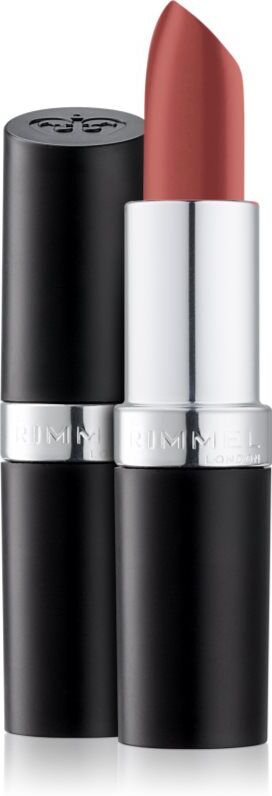
Rimmel Lasting Finish long-lasting lipstick shade 050 Natural Crush 4 gRimmel Lasting Finish, 4 g, Lipsticks for Women, Beautifully accentuated lips never go out of style. The Rimmel Lasting Finish lipstick envelops the surface of your lips in a continuous layer of irresistible and rich colour, accentuating any makeup look perfectly, whether you’re heading to work, a meeting or a party. It allows you to emphasise your lips while also giving them the shape you want or a fuller look. In just a moment, it will give your lips a gorgeous colour and perfect shape, making them the centre of attention and irresistibly kissable. Characteristics: high pigmentation long-lasting creamy texture How to use: Apply lipstick to lips from the centre to the corners using gentle strokes.2,87 £*Shipping: 3,99 £Secure redirect to the provider
-
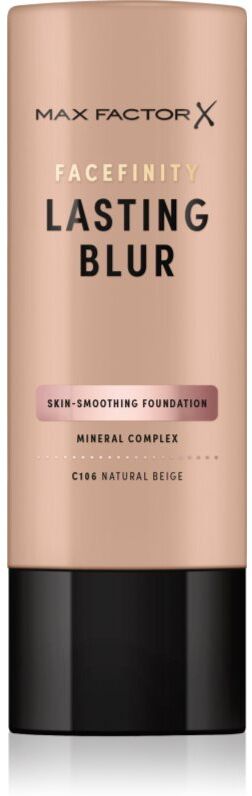
Max Factor Facefinity Lasting Blur long-lasting foundation shade C106 Natural Beige 35 mlMax Factor Facefinity Lasting Blur, 35 ml, Foundations for Women, Flawless skin is fundamental to every look, whether you’re going for bold evening makeup or very natural daytime makeup. And that’s where the Max Factor Facefinity Lasting Blur foundation can help. It blends in seamlessly with your skin and takes care of a perfectly even skin tone. Thanks to its coverage, it masks minor skin imperfections, such as hyperpigmentation, redness or acne marks, instantly. You’ll achieve an even skin tone in just a moment, and that will serve as an excellent base for any other makeup. Characteristics: long-lasting effect excellent coverage evens skin tone smooths the skin’s surface mattifies skin How to use: Apply foundation to the face using gentle strokes. Blend in thoroughly and evenly with the fingers or a sponge or brush. Apply foundation to all base points on the face, forehead, cheeks and chin.6,65 £*Shipping: 3,99 £Secure redirect to the provider


-
How are photons created?
Photons are created through a process called electromagnetic radiation. This occurs when an atom absorbs energy, causing its electrons to move to a higher energy level. When the electrons return to their original energy level, they release the absorbed energy in the form of photons. This process can happen in various ways, such as through thermal radiation, chemical reactions, or nuclear reactions. **
-
How can one convert the energy of different photons into monochromatic photons?
One way to convert the energy of different photons into monochromatic photons is through a process called frequency doubling or second harmonic generation. This involves passing the photons through a nonlinear crystal, which causes the photons to combine and create new photons with double the frequency and half the wavelength of the original photons. This results in monochromatic photons with a single, specific wavelength. Another method is through the use of filters or monochromators, which can selectively filter out photons of specific wavelengths, allowing only monochromatic photons to pass through. **
-
What distinguishes photons and protons?
Photons are elementary particles that carry electromagnetic radiation, such as light, while protons are subatomic particles found in the nucleus of an atom. Photons have no mass and travel at the speed of light, while protons have mass and are composed of quarks. Additionally, photons do not have an electric charge, while protons have a positive electric charge. **
-
Why can photons penetrate matter?
Photons can penetrate matter because they do not have an electric charge and are not affected by electromagnetic forces within the material. Additionally, photons do not have mass, allowing them to travel at the speed of light and pass through matter without being absorbed or deflected. This property of photons enables them to interact with atoms and molecules in the material, leading to phenomena such as absorption, reflection, and transmission. **
How far do photons travel?
Photons, as particles of light, travel at the speed of light in a vacuum, which is approximately 299,792 kilometers per second. This means that photons can travel vast distances in a very short amount of time. However, their travel distance can be affected by factors such as absorption, reflection, and scattering, which can cause them to be absorbed or redirected before reaching their destination. **
What are photons made of?
Photons are elementary particles, which means they are not made up of smaller components. They are the basic unit of light and electromagnetic radiation, and they have no mass and no electric charge. Photons are considered to be the force carriers for the electromagnetic force, and they exhibit both wave-like and particle-like properties. In quantum mechanics, photons are described as excitations of the electromagnetic field. **
Top-Angebote
Products related to Photons:
-
L.A. Girl Cosmetics PRO. Matte long-lasting foundation with matt effect shade Natural 30 mlL.A. Girl Cosmetics PRO. Matte, 30 ml, Foundations for Women, Flawless skin is fundamental to every look, whether you’re going for bold evening makeup or very natural daytime makeup. And that’s where the L.A. Girl Cosmetics PRO. Matte foundation can help. It blends in seamlessly with your skin and takes care of a perfectly even skin tone. Thanks to its coverage, it masks minor skin imperfections, such as hyperpigmentation, redness or acne marks, instantly. You’ll achieve an even skin tone in just a moment, and that will serve as an excellent base for any other makeup. Characteristics: long-lasting effect excellent coverage mattifies skin hydrates smooths the skin’s surface can be layered Ingredients: vegan product How to use: Apply foundation to the face using gentle strokes. Blend in thoroughly and evenly with the fingers or a sponge or brush.7,74 £*Shipping: 3,99 £Secure redirect to the provider
-
Rimmel Lasting Finish long-lasting lipstick shade 050 Natural Crush 4 gRimmel Lasting Finish, 4 g, Lipsticks for Women, Beautifully accentuated lips never go out of style. The Rimmel Lasting Finish lipstick envelops the surface of your lips in a continuous layer of irresistible and rich colour, accentuating any makeup look perfectly, whether you’re heading to work, a meeting or a party. It allows you to emphasise your lips while also giving them the shape you want or a fuller look. In just a moment, it will give your lips a gorgeous colour and perfect shape, making them the centre of attention and irresistibly kissable. Characteristics: high pigmentation long-lasting creamy texture How to use: Apply lipstick to lips from the centre to the corners using gentle strokes.2,87 £*Shipping: 3,99 £Secure redirect to the provider
-
Are photons electrons?
No, photons are not electrons. Photons are elementary particles that make up light and electromagnetic radiation, while electrons are negatively charged subatomic particles that are part of atoms. Photons have no mass and travel at the speed of light, while electrons have mass and are bound to the nucleus of an atom. **
-
What happens to photons?
Photons are elementary particles that make up light. They do not have mass and travel at the speed of light. When photons interact with matter, they can be absorbed, reflected, or transmitted. Absorption of photons can result in the excitation of electrons, leading to various physical and chemical processes. **
-
How are photons created?
Photons are created through a process called electromagnetic radiation. This occurs when an atom absorbs energy, causing its electrons to move to a higher energy level. When the electrons return to their original energy level, they release the absorbed energy in the form of photons. This process can happen in various ways, such as through thermal radiation, chemical reactions, or nuclear reactions. **
-
How can one convert the energy of different photons into monochromatic photons?
One way to convert the energy of different photons into monochromatic photons is through a process called frequency doubling or second harmonic generation. This involves passing the photons through a nonlinear crystal, which causes the photons to combine and create new photons with double the frequency and half the wavelength of the original photons. This results in monochromatic photons with a single, specific wavelength. Another method is through the use of filters or monochromators, which can selectively filter out photons of specific wavelengths, allowing only monochromatic photons to pass through. **
Similar search terms for Photons
-
Max Factor Facefinity Lasting Blur long-lasting foundation shade C106 Natural Beige 35 mlMax Factor Facefinity Lasting Blur, 35 ml, Foundations for Women, Flawless skin is fundamental to every look, whether you’re going for bold evening makeup or very natural daytime makeup. And that’s where the Max Factor Facefinity Lasting Blur foundation can help. It blends in seamlessly with your skin and takes care of a perfectly even skin tone. Thanks to its coverage, it masks minor skin imperfections, such as hyperpigmentation, redness or acne marks, instantly. You’ll achieve an even skin tone in just a moment, and that will serve as an excellent base for any other makeup. Characteristics: long-lasting effect excellent coverage evens skin tone smooths the skin’s surface mattifies skin How to use: Apply foundation to the face using gentle strokes. Blend in thoroughly and evenly with the fingers or a sponge or brush. Apply foundation to all base points on the face, forehead, cheeks and chin.6,65 £*Shipping: 3,99 £Secure redirect to the provider
-
What distinguishes photons and protons?
Photons are elementary particles that carry electromagnetic radiation, such as light, while protons are subatomic particles found in the nucleus of an atom. Photons have no mass and travel at the speed of light, while protons have mass and are composed of quarks. Additionally, photons do not have an electric charge, while protons have a positive electric charge. **
-
Why can photons penetrate matter?
Photons can penetrate matter because they do not have an electric charge and are not affected by electromagnetic forces within the material. Additionally, photons do not have mass, allowing them to travel at the speed of light and pass through matter without being absorbed or deflected. This property of photons enables them to interact with atoms and molecules in the material, leading to phenomena such as absorption, reflection, and transmission. **
-
How far do photons travel?
Photons, as particles of light, travel at the speed of light in a vacuum, which is approximately 299,792 kilometers per second. This means that photons can travel vast distances in a very short amount of time. However, their travel distance can be affected by factors such as absorption, reflection, and scattering, which can cause them to be absorbed or redirected before reaching their destination. **
-
What are photons made of?
Photons are elementary particles, which means they are not made up of smaller components. They are the basic unit of light and electromagnetic radiation, and they have no mass and no electric charge. Photons are considered to be the force carriers for the electromagnetic force, and they exhibit both wave-like and particle-like properties. In quantum mechanics, photons are described as excitations of the electromagnetic field. **
* All prices are inclusive of VAT and, if applicable, plus shipping costs. The offer information is based on the details provided by the respective shop and is updated through automated processes. Real-time updates do not occur, so deviations can occur in individual cases. ** Note: Parts of this content were created by AI.